
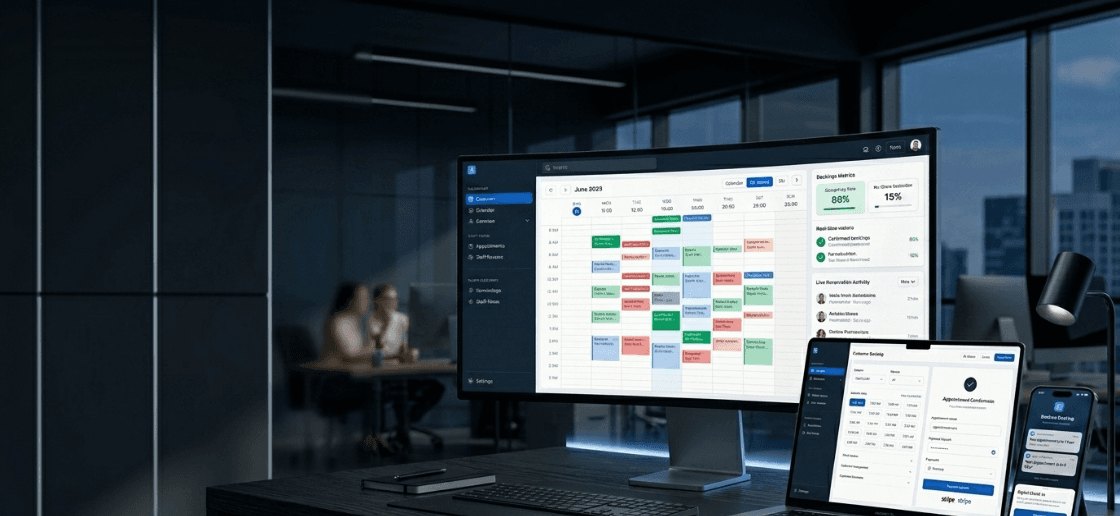
Launch Your
Booking MVP App
We design and code robust scheduling systems. Atomic database availability locks, Twilio automated SMS reminders, multi-timezone shift calendars, and proximity geofence check-ins built for operational startups.
Booking Software MVP Development Roadmap
We design and ship robust products in structured sprints. Interact with the journey pipeline steps below to view the architectural focus of each phase.
Phase 1: Calendar Scoping & Figma Wires
Key Features & Deliverables
- Interactive Figma prototypes for calendar grid views and driver shifts roster check
- Database ERD planning multiple relations: user profiles, availability slots, reservations
- API specification for checkout locks and real-time slot checking verifications
WebSockets Concurrency & SMS Notification Blueprint
We design robust data layers sync routines. Hover over the nodes in our blueprint schema to inspect the geofencing and DB sync rules.
Booking Input
Web / Mobile reservation query checking slots
Postgres Lock
Atomic SQL triggers locking availability columns
SMS Scheduler
Redis queue calls Twilio API to distribute SMS reminder
Atomic Availability Checks
PostgreSQL atomic transaction locks prevent two users from checks and purchasing the identical slot simultaneously.
Secure Timezone Offsets
Availability parameters saved in UTC format ensure staff shift roster grids translate cleanly across client locations.
Cron reminders queue
Server schedules checks database queues periodically, dispatching reminders to clients 24 hours before shifts begin.
The Production-Ready MVP Package
We design, engineer, and deploy fully functional software assets. Here is the concrete technical checklist transferred entirely to your startup upon launch.
High-Fidelity Renders
Interactive wireframes for calendar grids, availability selectors, and booking checkout designed in Figma.
Production codebase
Clean, modular React/Next.js/React Native TypeScript codebase optimized for swift appointment loads in Git.
Atomic Database Row Locks
PostgreSQL database schemas with strict row-locking triggers to completely prevent double-bookings.
Twilio SMS Notification Pipelines
Cron scheduling serverless queues and Twilio messaging triggers sending appointment reminders.
Engineering Spec Docs
Comprehensive Product Requirement Document, backend entity diagrams, API route manifests, and data flow architecture sheets.
Store & Cloud Deployments
Turnkey serverless APIs, App Store submissions, Play Store uploads, and automatic production deployment lines.
Launch Readiness Assessment Quiz
Answer 5 quick conceptual questions to evaluate if your product specifications are ready for engineering sprints.
Do users book slots concurrently during high traffic windows?
Got Questions? We Have Answers.
Review the common engineering and compliance queries calendar platforms founders discuss with our core development leads during scoping.
We design availability databases using PostgreSQL Atomic Transactions. During checkout, SQL queries execute check parameters locking availability rows immediately, ensuring subsequent checkout attempts for that identical slot fail dynamically.
We configure background chron workers. Every hour, process workers query reservation lists to isolate appointments starting within 24 hours, automatically calling Twilio endpoints to distribute SMS or WhatsApp notifications.
Yes. We save availability parameters in UTC datetimes database format. The frontend reads the local user browser timezone coordinates, mapping slot offsets dynamically to prevent timezone scheduling errors.
Yes. By storing geofence bounds coordinates, mobile sensors can trigger geofence checks automatically, notifying staff members when clients arrive within close range of scheduling hubs.
Absolutely. Upon project launch, all custom database migrations, Twilio webhook schedulers, timezone algorithms, and deployment assets are transferred to your Git repository, granting you complete intellectual property rights.
Ready to Build Your Booking App MVP?
Let's schedule a 30-minute technical scope review. We will map out your database concurrency schemas, review Twilio reminder webhooks, and deliver an estimated development roadmap document.